Ask Us Anything: Pricing expert Andrew Griffiths shares five common sales mistakes and how to avoid them
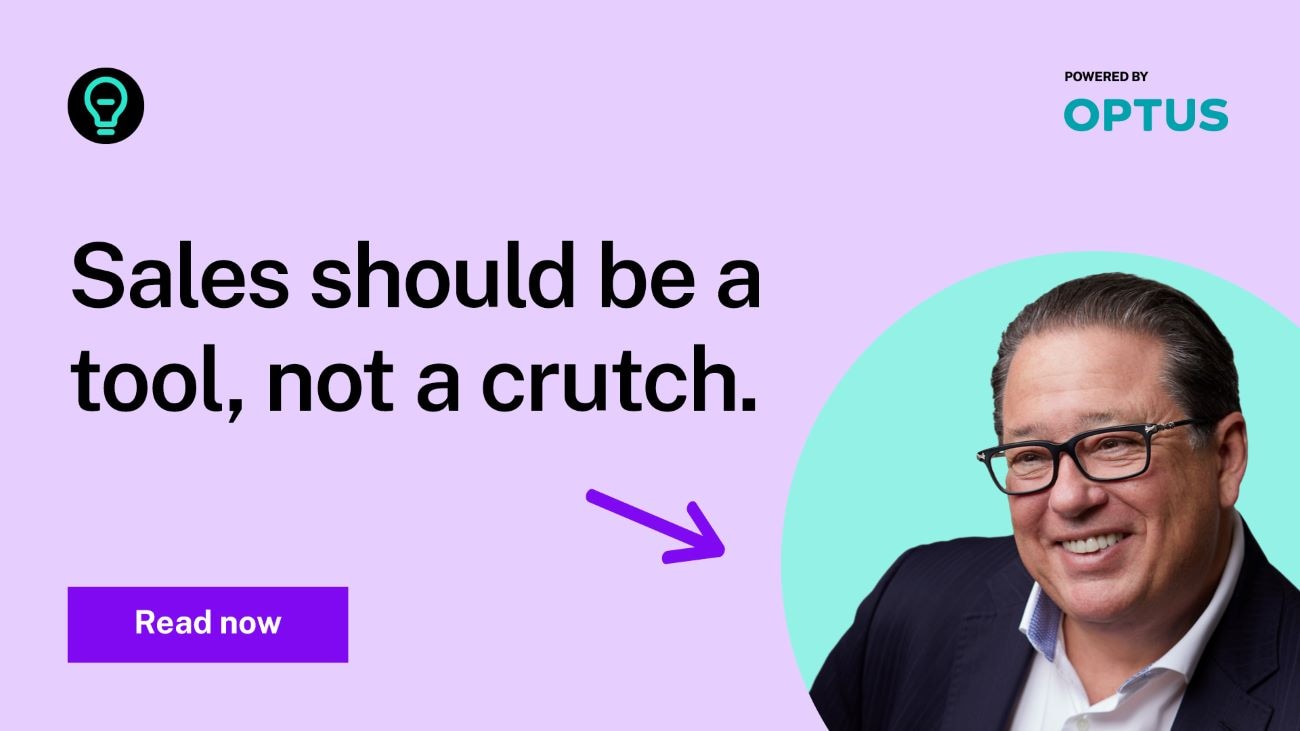
In this edition of Ask Us Anything, we asked small business expert and author Andrew Griffiths to share his tips on how your brand can stand out during big sale moments.
From how to get the best ROI from your sales to common mistakes businesses make, Griffith’s advice will help you plan your next big sale.
Big sales moments like Black Friday and Cyber Monday have become deafening. Every brand is shouting, discounting and scrambling for attention. And when that happens, smaller brands struggle to be seen and heard regardless of their offer.
That is why competing head on by offering bigger discounts, or trying to shout louder, is not really a good strategy. It’s time to be more creative.
If you want your brand to stand out, don’t begin by asking, “How do we beat everyone on price?” Start by asking, “How do we stand out in a way others can’t easily copy?” That is a far better question, and a far more powerful strategy.
One of the best examples of this was Patagonia’s famous Black Friday campaign built around the line, “Don’t Buy This Jacket.” Instead of encouraging more consumption, they challenged it. It was unexpected, values driven and completely aligned with who they were as a brand.
That is the lesson for all of us. Customers remember brands that make them feel something.
That feeling might come from aspiration, trust, belonging, shared values or simply the sense that this brand gets them. In crowded sales periods, the brands that can cut through are often the ones creating the strongest connection with their customers.
So what does that look like in practice?
- Give customers access, not just a deal. Invite them into something exclusive, early access, a private event, a behind-the-scenes look or direct access to the founder.
- Add value instead of simply cutting price. Offer expertise, support, a bonus service or something genuinely useful that strengthens the offer without eroding your worth.
- Teach instead of sell. Share ideas, insights and practical guidance that helps people make better decisions. Trust is built when people learn something valuable from you.
- Reward loyalty. Big sales periods are a brilliant time to thank the customers you already have, not just chase the ones you don’t.
- And above all, speak like a human being. Too many campaigns sound interchangeable. The brands that stand out sound real.
In a marketplace full of big discounts, the opportunity for smaller brands to be heard is not to be cheaper. It’s to be creative, more human and far more memorable for reasons other than the size of your discount.
Big sales moments can create urgency, attention and a short-term spike in revenue. But the bigger question is this: what works better for your business – one big sale or lots of smaller promotions throughout the year?
My view is simple. If you can avoid discounting in any shape or form, avoid it. But that’s a puritan view and in all likelihood you’ll feel a need to offer special promotions or sales throughout the year to get the attention of your customers and ideally get a revenue spike, albeit at a reduced margin.
Having too many sales throughout the year simply trains customers to wait for the next deal rather than value what you do at full price. That weakens margins, undermines positioning and makes it harder to build a brand people respect for anything beyond price.
The brands that rarely discount build solid, less price dependent businesses because they have built enough meaning, demand and loyalty so that price doesn’t need to do the heavy lifting.
And timing matters. When you run a sale at the same time as everyone else, you throw yourself into an already crowded marketplace that is only going to get noisier. Sometimes the smarter move is to do the opposite. Run a promotion when others are quiet. Create a sales moment on your terms. Give customers a clear reason to engage without competing with a wall of noise.
If you are going to do a sale, make it count. Make it strategic. Make it relevant. Make it feel like an event, not a habit or just a promotion to keep up with what others are doing.
Most importantly, use it as a chance to reinforce what makes your business unique, relevant and genuinely valuable to your customers. That is how you stand out in a crowded marketplace — not by copying what everyone else is doing, but by embracing what only you can offer.
Sales should be a tool, not a crutch. The strongest businesses are not built on endless promotions. They are built on value, clarity and trust.
Back to the question, what’s better for my business – one big sale or multiple smaller promos and sales? If I had to choose, I would take one strategic sale over a year full of random promotions every time. Why? Because frequent discounting trains customers to wait, while a smart, well timed offer can create momentum without destroying value. Build your business so price is not the reason people buy from you. That is a far stronger strategy in the long run.
The most common mistake brands make is simple. They discount too often, too randomly and with too little strategy.
A sale should never feel desperate. But that is exactly how many promotions come across. One week it is 20% off. The next week it’s a flash sale. Then a clearance. Then a limited time offer that somehow keeps coming back. Before long, customers stop valuing what you sell and start waiting for the next deal.
The real mistake is not running a sale. It is training your customers to believe that your full price is never your real price. Once that happens, your margins shrink, your positioning weakens and your brand starts to attract people who are loyal to the discount, not to you.
Here are the five most common mistakes brands make, and how to avoid them.
If customers know another deal is always around the corner, they will wait.
Avoid it: By making sales occasional and strategic, not routine.
Random sales feel reactive, not smart.
Avoid it: By connecting every promotion to a genuine purpose, limited release, a launch, an anniversary or a customer-specific campaign.
If price is the whole message, you reduce your brand to a transaction.
Avoid it: By talking about relevance, results, service, experience, values and what makes you worth choosing.
When every promotion sounds identical, customers tune out.
Avoid it: By creating a distinct reason to engage. Make it feel like an event, not another email blast.
Frequent discounting attracts people who buy on price alone.
Avoid it: By building connection around trust, uniqueness and customer experience, not just price.
The strongest brands don’t use sales as a crutch. They use them carefully, deliberately and in ways that support the bigger story of the business.
The goal is not to become known for the sales your business offers, but to become known and valued for bigger reasons, more powerful reasons and more important reasons that build connection and engagement with your ideal customers.
Optus Business
Find a solution that works with your business.
Whether you're a sole trader, small team, or large business, we’ve got plans to suit you.
Disclaimer: This article does not constitute advice and is shared for information purposes only – every business is unique, we suggest seeking independent advice to suit your own needs. This content was produced by SmartCompany, in partnership with Optus Business.
Optus to offer the new iPhone 18 Pro range and Apple Watch Series 12 lineup
10 September 2026
iPhone 18 Pro and iPhone Duo have finally been announced, and you can learn more about them here.
What we’re watching in September 2026
7 September 2026
Discover what Optus is watching this August. 1. The Gentlemen S2, Netflix, 2. The Love Hypothesis, Prime Video. 3. The Runn...
Three reasons why Optus long-expiry prepaid plans are perfect for seasonal workers
4 September 2026
Are you a seasonal worker? It could be a smart move to pick up a long-expiry prepaid plan. Here’s three reasons why.