The future of CX is precinct-based infrastructure
In the past, telecommunications focused largely on human-to-human communications – providing connections and exchanges between individuals as a way of strengthening relationships and connecting communities. Over my 20+ year career in the telecommunications industry, I have been part of the incredible advances in technology that now enable digital collaboration, access, engagement, and organisational flexibility.
Looking ahead, the uplift in functionality and capability of underlying digital infrastructure is where I see the biggest industry change in the coming years. We call this precinct-based intelligent infrastructure. Whereas in the past, precinct planning focused largely on the physical experience, we’re seeing an increasing focus on incorporating digital design into space planning.
This sees a shift to fully integrated, smart precincts, providing wireless connectivity and interoperability for all space users – enhancing employee or consumer user experiences, space management, operations and analytics, sustainability and ultimately the value that the precinct provide those who use it, and financial returns to those who own these assets.
Tech advances from LA to the world
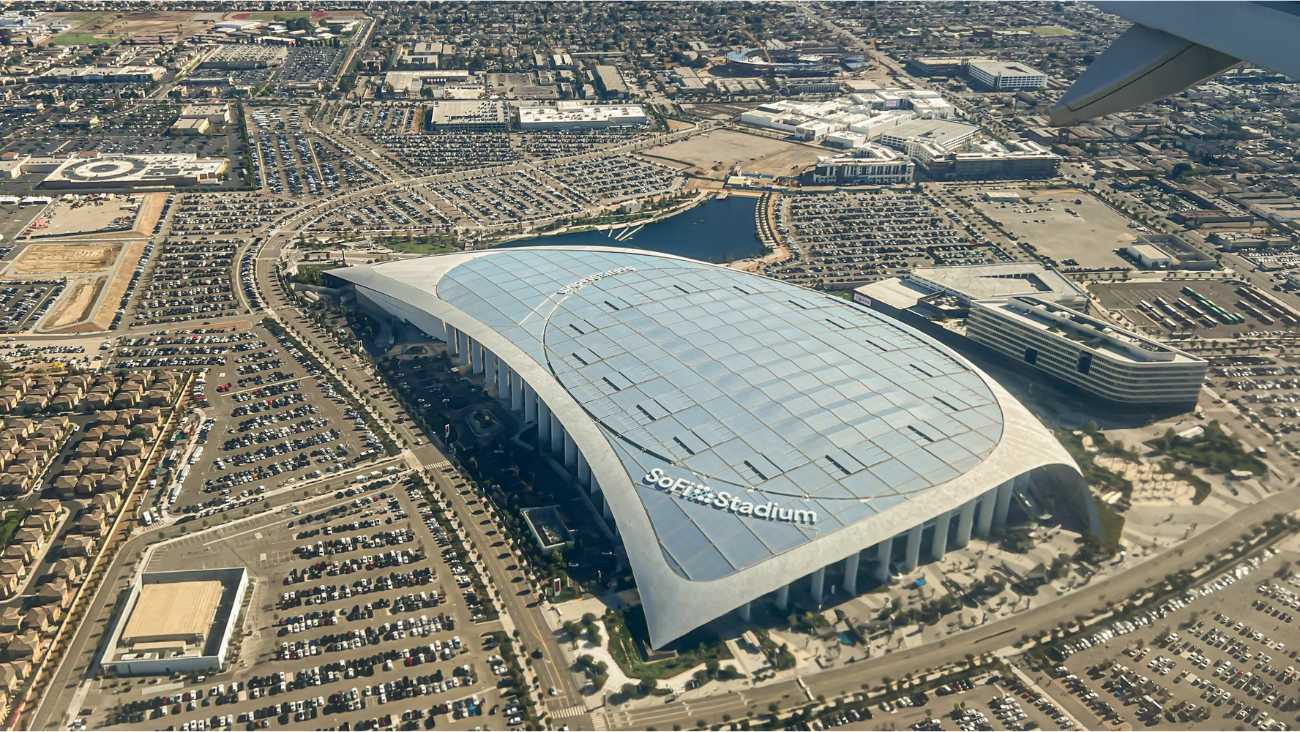
Earlier this year I visited the SoFi Stadium in Los Angeles, home to the LA Rams, as host to a number of Australia’s largest companies seeking to understand more about digitally-enabled CX on a large scale.
As well as being an outstanding venue to watch sport, this is one of the most technologically advanced stadiums in the world, using digital technology to massively enhance fan experience.
The use of technology provides an incredible audience experience, digitally integrating on field action with the viewer. The stadium includes the Infinity Screen, the largest video board ever created for a sporting venue. It allows fans to see what’s happening in the stadium from any vantage point with the entire precinct’s digital infrastructure. Athletes, coaches, support staff and fans, and coaches share immersive participation and connectivity during major events.
By re-imagining the fan experience, SoFi Stadium is a great example of intelligent digital design.
Optus Stadium as the new frontier
Back here in Australia, the FIFA World Cup showed how core technology translated to better experiences. At the technology level, the infrastructure at Sydney’s Accor Stadium, at Sydney Olympic Park, is built by Optus and our partners around new 5G MIMO (multiple input multiple output) distributed antenna systems (DAS) and 5G mmWave solutions. That translates to infrastructure comprised of 32 sectors with over 900 antennas, approximately 100 km of connected cabling, and hundreds of associated equipment distributed throughout the venue.
At the customer experience level, as every fan who was in the stadium or in its precinct during the recent World Cup games knows, that meant that all their photos, calls and messages to families and friends could be shared at the most memorable moments.
The Optus Stadium in Perth, is another example of where smart connectivity and 5G enable precinct-based infrastructure, supporting outstanding fan experiences with seamless connectivity and limitless social engagement.
Image Source: Optus Stadium, Perth Western Australia
Optus and Lendlease reimagine the future of smart spaces
If precinct-based digital infrastructure is all about empowering customers through a combination of their own experience and employees’ experience, our recent announcement with Lendlease provides the opportunity to apply digital infrastructure to further enable smart space optimisation as we redefine the future of tech-enabled smart spaces.
We are working with Lendlease to transform their own team experience through connectivity and data services supporting productivity, asset retention and employee satisfaction. And we are supporting Lendlease as they evolve their employee experience and workplace solutions using 5G technology and network-derived data.
Combining our collective expertise will allow us to catalyse the creation of smart places that deliver long-term sustainable value. This encompasses everything from spaces to cities, putting a strong emphasis in enhancing interactions within and across ecosystems.
Smart connections, smart spaces, smart communities
Users, employees and consumers are moving faster than ever towards influencing how smart the communities we expect to work and live in will be.
From our perspective at Optus, our role is increasingly to enable collaboration, connectivity, and communication within and between spaces, built around a vision of delivering wirelessly connected communities. 5G will be the core technology because of its low latency, high speed and inherent flexibility, but its purpose will be to create and support better EX, CX and sustainability that is future-proofed and scalable.
Immersive technology continues to change how consumers view and experience live events, such as sport, music, and performance. I think we can safely predict that those experiences are only the beginning.
Further information
If you would like to continue this conversation further, please reach out to your Optus Account Manager, fill in the form below for a call back or phone 1800 555 937.



Stuart Pritchard Vice President Enterprise Optus Enterprise and Business With over 20+ years of experience across Optus and the Singtel Groups, Stuart leads Optus Enterprise's strategy and execution through our sales team nationally. His team is responsible for managing and supporting all enterprise and government relationships, as well as the Chair of the Optus Strategic Advisory Board.
Sign up
Want to hear more from Optus Enterprise, sign up to receive the latest news and insights sent straight to your inbox.
To adapt to rapid change, you need more than technology
10 September 2026
Ask any enterprise leader about their five-year strategy and they’ll tell you the same thing: static roadmaps are dead.Boar...
Marist180 x Optus: The hidden cost of disconnection
9 September 2026
When Australians think about connectivity, they often think about convenience. Streaming a movie. Joining a Teams meeting. ...
Project Aurora: Smarter Satellite Servicing for a connected future
12 August 2026
For decades, the satellite industry followed a simple model: build a satellite, launch it into orbit and operate it until i...