Google Pixel 7a vs Pixel 6a: Here’s how they compare
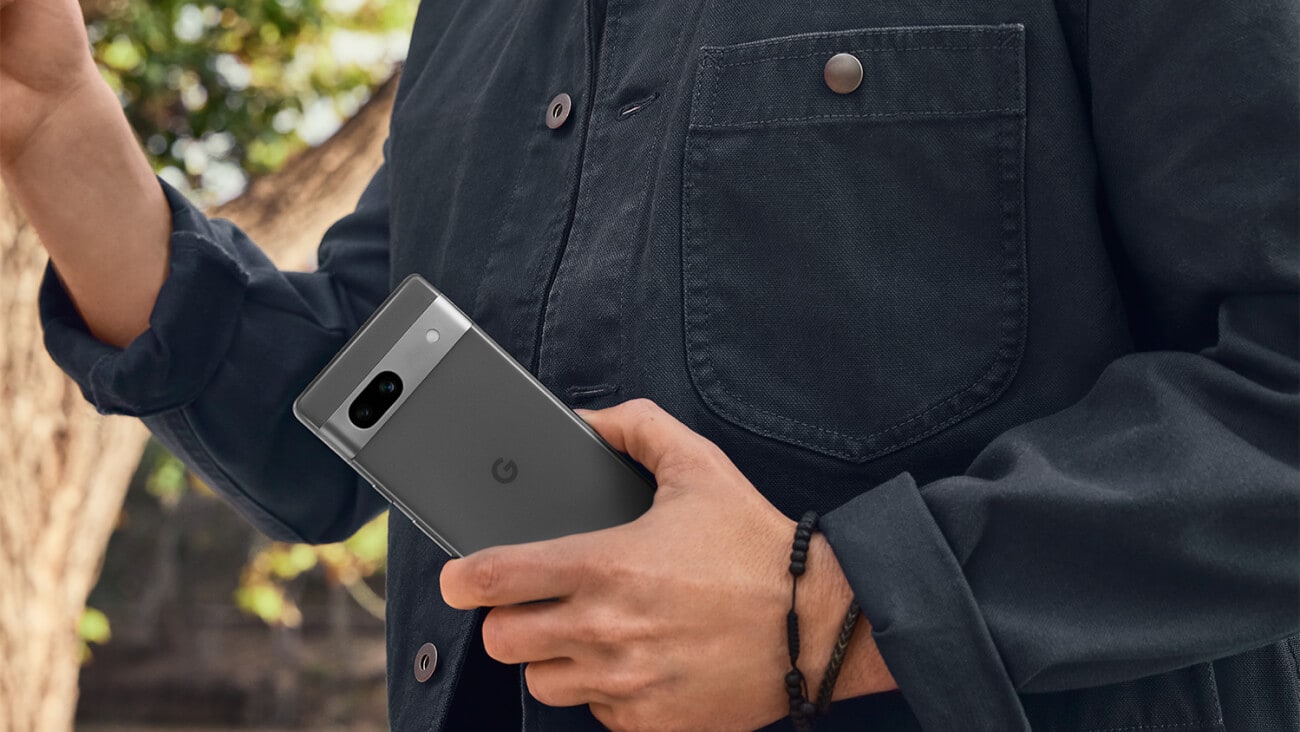
Image credit: Google
Google Pixel 7a is a whole lotta smartphone at a great price. Equipped with some attention-grabbing security features and amazing camera capabilities that Google Pixel phones are known for. The Google Pixel 7a looks set to excite fans lucky enough to score themselves a device after the official Google Pixel 7a release date on 11 May 2023.
If you want to refresh your memory on what the Google Pixel 7 range of phones is all about, there’s more information on the Pixel 7 and Pixel 7 Pro in a separate article.
Some Google Pixel 7a specifications at a glance:
What's great
- 64MP main rear camera
- Pocket-friendly
- Great video quality
- More refresh rate options
- eSIM capable
- Wireless charging
- Powered by Google Tensor G2 chip
- Adaptive Battery can provide all-day battery life1
We’re curious about
- Performance and design
- How the Pixel 7a feels given it is 15g heavier than the Pixel 6a
- Image capture quality
For people currently in the market for a budget-friendly Android phone, you might want to know how the Pixel 7a compares to its predecessor the Pixel 6a.
If that’s you, keep reading for our breakdown of the main differences and relevant similarities of the Pixel 7a when compared to the Pixel 6a.
Google Pixel 7a specs
Dimensions 152.4mm (H) x 72.9mm (W) x 9mm depth (D)
Display FHD+ (1080 x 2400) gOLED at 429 ppi 60-90Hertz refresh rate
Screen size 6.1-inch
Weight 193g
Processor Google Tensor G2
RAM & internal memory 8GB, 128GB
SIM type eSIM and pSIM
Main camera 64MP + 13MP ultrawide camera
Front facing camera 13MP
Battery capacity 4300mAh
Fingerprint sensor Yes
Google Pixel 6a specs
Dimensions 152.2mm(H) x 71.8mm (W) x 8.9mm (D)
Display FHD+ (1080 x 2400) OLED at 429 ppi 60Hertz refresh rate
Screen size 6.1-inch
Weight 178g
Processor Google Tensor Titan M2™
RAM & internal memory 6GB, 128GB
SIM type eSIM and pSIM
Main camera 12.2MP dual pixel wide camera + 12MP ultrawide camera
Front facing camera 8MP
Battery capacity 4410mAh
Fingerprint sensor Yes
Colourful and sophisticated, the Google Pixel 7a weighs in at 193g. According to Google, the Pixel 7a is made from approximately 21% recycled materials based on weight – something in line with the company’s commitment to being carbon neutral since 2007.
Pixel 7a comes with IP67 protection, similar to the Pixel 6a, so it can handle exposure to a little water and dust2. And the tough Corning® Gorilla Glass® 3™ screen is designed to be scratch-resistant, which should help keep your phone looking and feeling great.
The Pixel 7a is heavier than Pixel 6a, weighing in at 193g compared to the Pixel 6a’s 178g, and feels ever so slightly larger in the hand – as you can see from looking at the dimensions side-by-side in the comparison table above.
Both phones benefit from an equal IP67 protection – giving you confidence to take your phone pretty much everywhere you go2. And the beautifully durable Corning® Gorilla Glass® 3™ screen provides resistance to scratches on both the Pixel 7a and 6a, helping reduce breakages related to deep scratches.
The screen size of the Google Pixel 7a is as big as the one found on the Pixel 6a – with both phones measuring 6.1 inches.
Where the Pixel 7a edges ahead in this comparison is in its ability to refresh what is shown on the display, known as the refresh rate. The Pixel 7a is blessed with a refresh rate of between 60 and 90Hertz, helping to make the overall smartphone experience feel super smooth and vibrant. Even better, this ability to select an appropriate refresh rate based on what the phone is trying to display can help to conserve battery life on the Pixel 7a.
Both the Pixel 7a and Pixel 6a feature a display with a 20:9 aspect ratio, providing plenty of real estate for looking at images and video on both phones.
Whilst both devices are identical in terms of screen size, featuring 6.1 inch FHD+ displays, it is the refresh rate on graphics that really sets the displays apart. The Pixel 6a is limited to a 60Hertz refresh rate while the newer Google Pixel 7a display refreshes at a rate of between 60 and 90Hertz – which means the Pixel 7a can refresh what is shown on the display between 60 and 90 times a second, depending on what you select, while the Pixel 6a refreshes 60 times a second. The ability of the Google Pixel 7a display to call on an additional 30Hertz can help make content appear smoother to the human eye when compared to the Pixel 6a.
Google Pixel phones are well known for their amazing cameras and the Pixel 7a camera should not disappoint fans in this regard.
The rear camera setup has a 64MP lens, optical image stabilisation that’s capable of capturing 4k video at 60fps and an ultrawide 13MP camera with a 115 degree field of vision capable of capturing 4K video at 30fps.
On the front of the Pixel 7a you’ll find a 13MP selfie snapping camera, complete with a 95 degree field of vision.
All of that means you should be spoilt for choice when it comes to capturing life’s most memorable moments, and you can fix blurry photos and remove distractions with just a few taps in Google Photos.
A great but sometimes overlooked feature of cameras on Pixel 6 and later phones is Google Live Translate. With Live Translate, you can have conversations face to face in 48 languages, chat in 16 languages with messaging apps and translate menus with your camera3. A colleague went to Switzerland over Easter and swears scanning and translating Swiss-German menus to English is how she and her husband survived. This handy feature is available on the Pixel 7a camera and requires just a couple of taps to set up.
Looking at the Google Pixel 7a camera alongside that of the Pixel 6a, there are some clear differences that we can see. Firstly, the Pixel 6a camera relies on a 12.2MP and 12MP wide and ultrawide lens respectively. The Pixel 7a does better on both counts – Pixel 7a’s 13MP ultrawide camera lens is better than the Pixel 6a’s 12MP lens. Also, the Pixel 6a’s 12.2MP wide camera is really no match for the Pixel 7a’s 64MP wide camera lens at the back. Google Pixel 7a clearly steals the show in the camera department.
It's the same story at the front with Pixel 7a’s 13MP camera some way ahead of the Pixel 6a’s 8MP camera.
The camera improvements in the Google Pixel 7a are certainly a strong selling point over the Pixel 6a and one of the reasons this latest Pixel beauty is my new favourite.
Engineered by Google, the Pixel 7a is powered by the Google Tensor G2 chip – which helps make Pixel 7a faster and more efficient than the Pixel 6a4.
What’s more is this is the same chip that’s inside Pixel 7 and Pixel 7 Pro, powering Google smarts for great battery life and amazing photo and video quality. With the Pixel 7a processor matching that of the higher-specced and pricier Pixel 7 and Pixel 7 Pro, it should help provide users with a smooth and responsive experience, at a lower price. Can’t complain.
Also supporting the Pixel 7a processor in delivering a good user experience is the 8GB RAM which is accompanied by 128GB internal storage.
If we look at the difference between the Pixel 7a processor and that of the Pixel 6a, we see the Pixel 6a uses the OG Pixel-specific processor that Google developed, the Google Tensor Titan M2™, while the 7a is powered by the newer Google Tensor G2.
The Google Pixel 7a also has an extra 2GB of RAM than the 6GB RAM found in the Pixel 6a, which can help the Pixel 7a appear to run faster and more smoothly than the Pixel 6a, as it has more capacity for having multiple apps open in the background and switching between them.
And as we might expect from recently released phones, both the Pixel 7a and Pixel 6a support physical SIM (pSIM) cards as well as embedded SIM (eSIM) cards. This can be really helpful if you need to use more than two numbers on one phone, separating work and personal matters, as an example. Find out more about Optus eSIMs as well as how to convert your physical SIM to an Optus eSIM.
The battery inside the Pixel 7a is an Adaptive Battery, which means it has the smarts to conserve battery power when required. Google claims the 4300mAh Pixel 7a Adaptive Battery can last over 24 hours1 and up to 72 hours5 if users turn on Extreme Battery Saver mode.
And better yet, the Pixel 7a battery can charge super fast6 when using the Google 30 W USB-C® Charger plugged into a wall outlet (sold separately) – something that is not available with Google Pixel 6a.
Now let’s compare the Pixel 7a battery against the Pixel 6a battery. The Google Pixel 6a uses a 4410mAh battery, which is also classed as an Adaptive Battery. Adaptive batteries can learn how you use your phone over time to help save battery in ways that work best for you. So both phones benefit from this same smart technology. Yet the Pixel 6a does not support super fast charging as stated above, so while the batteries in isolation may be pretty similar, the ability to charge up your 7a at super fast6 speeds may be the detail that seals the deal for you.
In summary, the Google Pixel 7a ticks a lot of boxes:
Style – check, smarts – check, camera – BIG check, pocket friendliness – a big bold green tick with a couple of hearts thrown in.
Did you know you can now buy the latest phones from Optus outright or on a phone payment plan for 12, 24 or 36 months? You also get free express delivery when you order online.
Samantha Shilton works for Optus. A dog mother and nature lover, she gets down to the beach most mornings for walkies and a quick dip. On the weekend, you might spot her whizzing past you on her Kawasaki.
[1] For 'over 24 hours': Estimated battery life based on testing using a median Pixel user battery usage profile across a mix of talk, data, standby and use of other features. Average battery life during testing was approximately 31 hours. Battery testing conducted on a major operator network in California. [2] Designed to comply with dust and water protection rating IP67 under IEC standard 60529 when each device leaves the factory, but the device is not waterproof or dustproof. The accessories are not water- or dust-resistant. Water resistance and dust resistance are not permanent conditions and will diminish or be lost over time due to normal wear and tear, device repair, disassembly or damage. Phone is not drop-proof, and dropping your device may result in loss of water/dust resistance. Liquid damage voids the Limited Warranty, but you may still have certain rights under applicable consumer law. See g.co/pixel/water for details. [3] Not available in all languages or countries. Not available on all media or apps. See g.co/pixel/livetranslate for more information. [4] Compared to Pixel 6a. Speed claim based on internal testing on pre-production devices. [5] For 'up to 72 hours': Estimated battery life based on testing using a median Pixel user battery usage profile across a mix of talk, data, standby and use of limited other features that are default in Extreme Battery Saver mode (which disables various features including 5G connectivity). Battery testing conducted on a major operator network. For both claims: Battery testing conducted in California in late 2022 on pre-production hardware and software using default settings, except that, for the 'up to 72 hours' claim only, Extreme Battery Saver mode was enabled. Battery life depends upon many factors and usage of certain features will decrease battery life. Actual battery life may be lower. [6] Up to 18 watts. Fast wired charging rate is based upon use of the Google 30 W USB-C® Adapter Charger plugged into a wall outlet. Actual results may be slower. Adapters sold separately.
Here’s the new and wide Galaxy Z Fold8 from every angle
10 August 2026
Keen on Samsung’s latest foldable? The Galaxy Z Fold8 takes on an exciting new shape, shorter than this year’s Fold8 Ultra,...
Compare Samsung Galaxy Z Fold8, Fold8 Ultra and Z Flip8 vs. Galaxy Z Fold7 and Z Flip7
23 July 2026
Looking to buy a foldable? We’ve compared the Samsung Galaxy Z Fold8 and Z Flip 8 to the Z Fold7 and Z Flip7 to help you de...
Introducing the Samsung Galaxy Z Fold8, Z Flip8, and Z Fold8 Ultra
23 July 2026
Samsung has just revealed the new Galaxy Z Fold8, Galaxy Z Fold8 Ultra and Galaxy Z Flip8.