An insider’s travel guide to Berlin
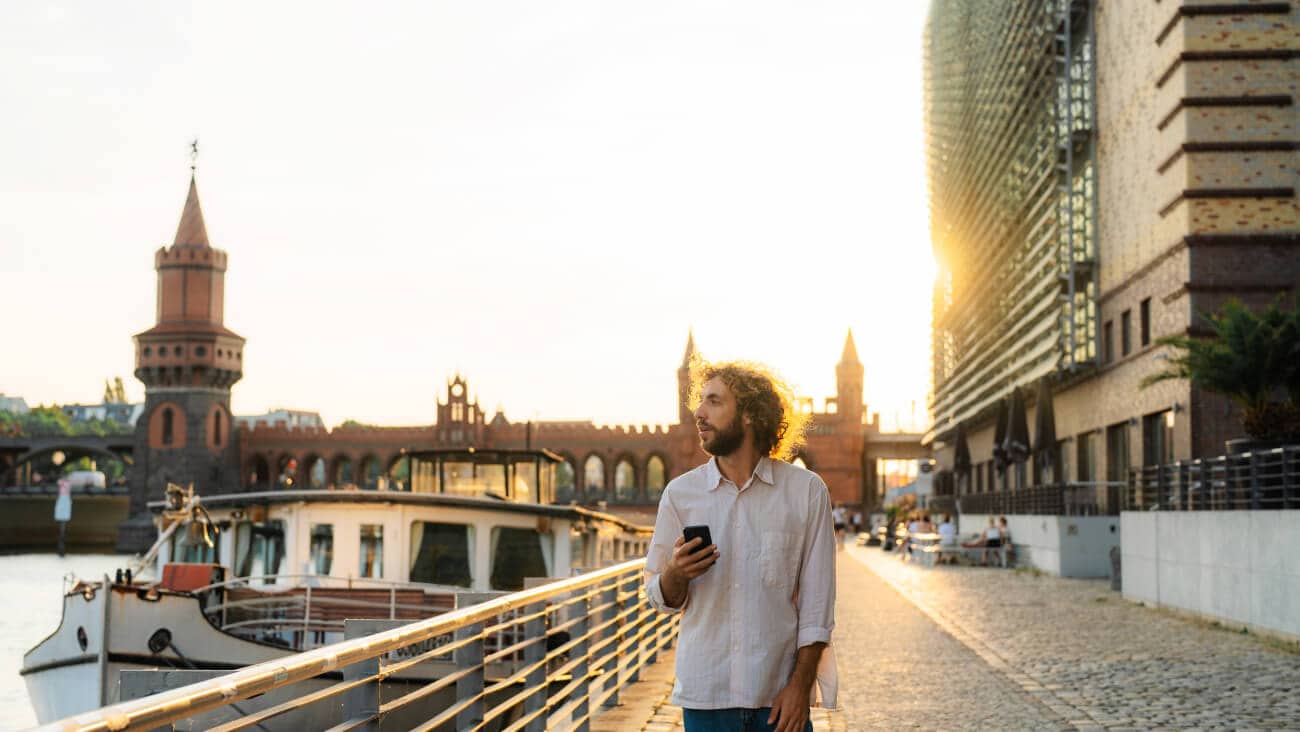
Image credit: iStock
Berlin is one of those cities that conjures so many layers of meaning. For many Australians it’s a drawcard to experience everything cutting edge and cool that Europe can offer. With its unique blend of history with a modern twist it’s become a destination city that draws people from around the world.
We’ve compiled a short guide to the main attractions and asked for some insights from Zach Bui, former Optus writer turned Berliner.
First, the laundry list of the main attractions with some bonus tips from Zach.
An emblematic symbol of Berlin, the Brandenburg Gate is a neoclassical gateway to the civic precinct in central Berlin, not far from the Reichstag building and close to the Tiergarten Park.
During the Cold War, the Gate was isolated and trapped behind the Berlin Wall, heightening its symbolic significance when the Wall fell in 1989.
"Brandenburg Gate is the last remaining city gate left standing in its original location. In the past only royals were allowed to walk through the middle but these days anyone can go through. If you look at the columns closely, you can even see the patchwork of bullet holes from WW2," Zach says.
"It’s also a great location to hit up all the other big tourist attractions, the Holocaust memorial and Reichstag are just around the corner, as well as most of the embassies."
The Reichstag which houses the modern German parliament (Bundestag), is located in the central Mitte district of Berlin, very close to the geographic centre of the city.
"Book a ticket ahead of time to walk around the glass dome ceiling and look down on the parliament floor (intended as a symbolic gesture of governmental transparency)," he says.
Memorial to the Murdered Jews of Europe is a powerful and sombre monument located in the centre of Berlin, dedicated to commemorating the six million Jewish victims of the Holocaust. Designed by architect Peter Eisenman, it consists of 2,711 concrete stelae (slabs).
As visitors walk along the undulating pathways passing through the stelae, the ground slopes downward and the concrete blocks rise up overhead, creating a disorienting and oppressive atmosphere meant to represent the insidious way the events of the Holocaust unfolded.
"There are a few memorials as well as the well-known and eerily effective Memorial to the Murdered Jews of Europe. Go a little further to find memorials for the Sinti and Roma, disabled people and LGBTQI+ people," Zach says.
The Berlin Wall Memorial is located somewhat further out from Berlin's centre.
Stretching for nearly a mile, this powerful open-air exhibition that commemorates the Berlin Wall's division of the city from 1961 to 1989. It features a preserved section of the original wall and reconstructed guard tower.
Located in the city centre, Checkpoint Charlie was one of the most famous Berlin Wall border crossings between East and West Berlin during the Cold War era.
"Checkpoint Charlie is an interesting piece of history but be warned there can be people running gambling scams (guess the ball under the cup type things) around the site. My tip is to avoid any museums around there; they're a rip off and not very thoughtfully done. Definitely do not buy a ‘piece of the wall’ - those are almost 100% likely to be fake," Zach says.
A UNESCO World Heritage Site situated in the middle of the Spree River, Museum Island has five major museums, each offering a dive into different epochs and themes, from the ancient world to 19th-century art.
"Museum Island is the oldest looking area of Berlin, with beautiful classically European buildings and plenty of museums to visit. Sometimes there's even an annual free open air opera event to bring in spring," he says.
"This was also the site of the first Nazi book burning, you’ll see a plaque and glass panel on the ground which looks into a basement full of empty bookshelves symbolising all the books and knowledge that was lost."
Rising from the Grunewald forest in former West Berlin stands the eerie, man-made hill known as Teufelsberg or Devil's Mountain. This abandoned Cold War relic provides a unique glimpse into the city's 20th century history as well as stunning views from its summit.
"Teufelsberg is a hill where they buried all the war rubble and created a big green space," Zach says.
"From the top you can get a view of the forest all the way to the horizon. There's also an old American Cold War spy station that's now a street art museum that still has artists coming through to paint murals."
A preserved section of the Berlin Wall turned into an open-air gallery, the East Side Gallery showcases murals that speak of hope, reconciliation, and the global desire for freedom.
"Don't do what I first did and assume murals were on both sides, one side has the murals from the 80s and the other is general graffiti," Zach says.
"The wall also sits near a nice canal and green strip where you can grab a pizza and relax afterwards."
There are several free museums such as the Topography of Terror, which covers Nazi history, and the Palace of Tears which exists in the room that was the border of East and West Berlin. There you can see and hear testimony of people about the experience of saying goodbye to loved ones when their ‘daypass’ has ended, what the interview booths were like to pass through, as well as how differently East and West German media portrayed events.
Our insider Zach is yet to visit here, but here's a tip from us.
Berlin has a long football heritage and will this year host the UEFA Euro 2024TM finals in its iconic Olympiastadion (Olympic Stadium). Originally built for the 1936 Olympics, it has a rich and layered history including some epic matches.
Win a trip to the UEFA EURO 2024TM final!
What were your first impressions of the city?
"For starters, there's a lot more green space than you'd imagine. There are massive parks in the middle of the city that genuinely feel like you can get away from the hustle and bustle," Zach says.
"There's also a lot of forest surrounding the city that you can easily get to in under an hour. Plus, good public transport and zones where they've limited non-energy efficient cars make it more pleasant to walk around.
"If you ride a bike, you'll love how thoroughly the bike lanes cover the city with some main roads even sporting two lanes, one on the road and one on the sidewalk. Usually, they’re on the sidewalk so you don’t have to contend with cars. This does mean that as a pedestrian you should keep an eye out for not wandering into them though," Zach says.
"Try to keep an open mind and make sure to visit different areas - each area offers something different and unique from the food and bars to the architecture. Also, don't stay in the city centre. Public transport is so good, you really don't need to and it's the most boring area. Kreuzberg, Neukölln, Prenzlauer Berg, Friedrichshain and Charlottenberg are the main districts people actually live in and are a good place to get a feel for the real Berlin," he says.
Beyond the museums, Berlin has long been renowned for its lively, uninhibited nightlife that has attracted artists, bohemians and hedonists from around the world. The city has been staying up late to party emerged in the years following World War I.
The Roaring 1920s Berlin became a tolerant haven with many nightclubs that offered provocative cabaret shows and a sanctuary for the LGBTQi+ community.
After WW2, the city developed a unique underground scene in part due the isolation of West Berlin from West Germany. In 1970s and 80s the underground arts scene and punk movement created an opportunity for people to rebel against conservative mores.
Since reunifications a vibrant techno developed especially in abandoned spaces, giving rise to Berlin's signature underground techno sound. The former Ostgut brewery became internationally famous as the notoriously hard-to-get-into Berghain techno temple.
Berlin remains a global party capital, celebrated for its free-spirited acceptance, anything-goes attitudes and clubs that can go for days.
"If you like clubs, there are many, many options beyond Berghain, so don't get bummed if you get knocked back. Also don't try too hard, wear comfortable clothing that you are happy to dance and relax in," Zach says.
"There's no such thing as ‘weird’ in Berlin. People do whatever they want, and no one bats an eye. People might occasionally stare (it's a German thing - they don't see it as impolite) but are generally kind. They're more to the point and less performative, but they just see that as more polite than wasting time with meaningless niceties.
"Berlin is incredibly progressive, and there is a real sense of community and social responsibility. If you see bottles on the ground next to trash cans, that's for people to collect as ‘pfand’ where they return it to a grocery store and get a bit of money off their shop. People may also approach you and ask for your bottles," he says.
"In summer you'll often come across people performing or hanging out in public spaces, especially parks, in a way that people don't really do in Australia. There's a real sense of enjoying being outside without needing something to do. But there are also plenty of free outdoor things to do and see. For example, open mic karaoke at Mauerpark is a lot of fun, and people even come around and sell you drinks for cheap out of eskies.
"Berlin has quite long dark winters, so they really make the most of their summers," he says.
"Public transport is dead cheap and comes often. You can get unlimited travel passes for a day, week or month. Subways come every 5 minutes, above ground trains every 10 minutes, though buses are still unreliable as always."
"You do have to hunt a little to find good food, although the kebabs are generally good. Definitely look up recommendations before going as you can't just stumble into good places as easily as other cities," he says.
"Somewhere ‘within the ring’ (the outer ring of the train line) means you’ll be able to get pretty much everywhere easily. If you're close to a U-Bahn (subway) even better."
"Everyone (almost) speaks English. Even if they don't, a lot of people will try hard to get to an understanding with you based on body language and any overlapping words you share. There's no hostility towards you for not speaking German, they’ll appreciate you giving it a go but won't mind if you don't. Often if you do give it a go, they'll just switch to English for you anyway," Zach says.
International Roaming
Roam from just $5/day and get 5GB on Choice Plus plans in over 100 Zone 1 destinations. Find out more.
T&Cs apply.
Black Friday tech deals: when do Black Friday sales start?
12 October 2026
Black Friday tech deals are almost here. This is what you need to know about the big annual sales event.
EOFY scams: how to stay safe
7 October 2026
Stay safe this EOFY season – protect yourself from EOFY scams and read up on the tactics of scammers.
More than a game: celebrating the community spirit of the Koori Knockout
6 October 2026
We’re proud to show up for important events like the Koori Knockout.