Spectacular animal documentaries on Netflix
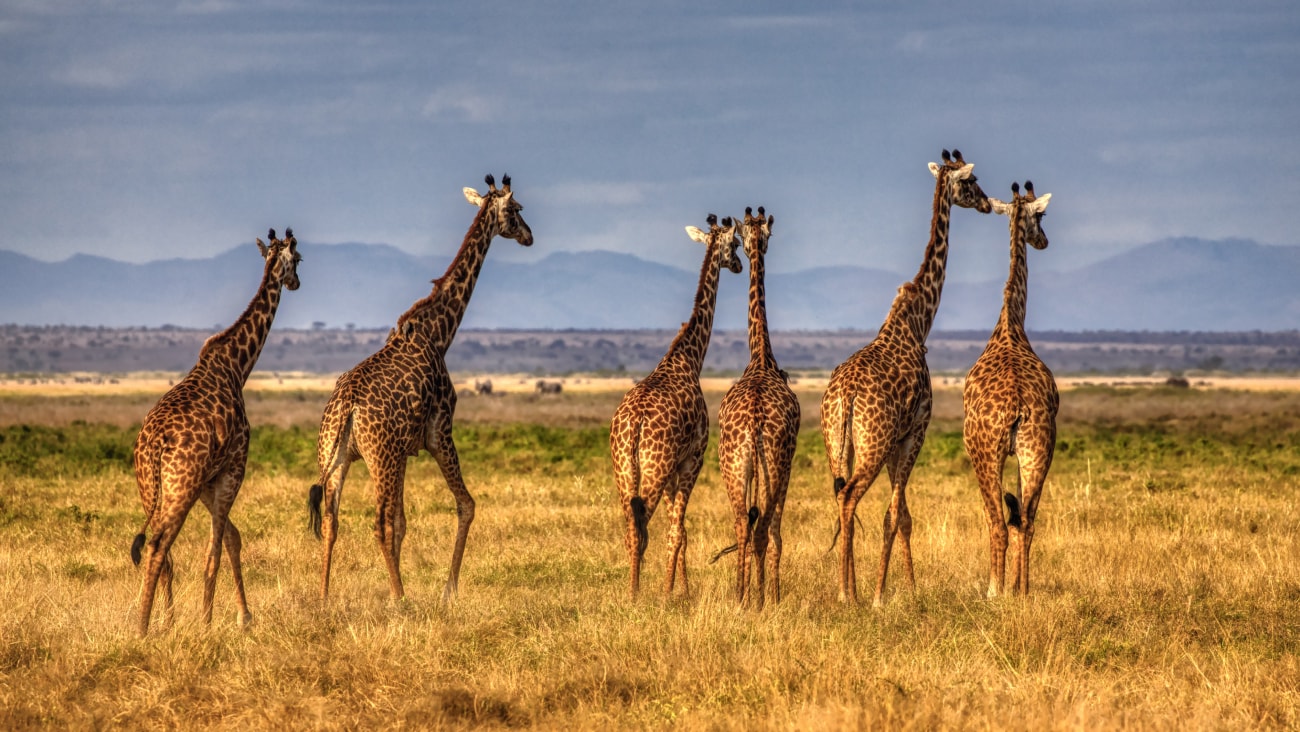
Image credit: Mariola Grobelska on Unsplash
Keen to connect with nature but can’t go outside? Go ahead and press play on the latest animal documentaries on Netflix to celebrate World Environment Day. These titles combine all the things that make a great nature doco – eye-popping visuals, insightful storytelling and high-stakes drama that only the animal kingdom can deliver.
Whether it’s a family-friendly film or epic series, animal documentaries are the perfect way to deepen your understanding of the vulnerable creatures and eco-systems we share the planet with.
Rated: PG
Let’s start with a docuseries that tackles all 4 billion years of our planet’s natural history.
Produced by Stephen Spielberg and narrated by Morgan Freeman, this ambitious 8-part series tells the epic story of how life miraculously survived when Earth was smacked down by various apocalypses.
The same studio behind Jurassic Park was tasked with animating more than 60 prehistoric animals, and there’s some fantastically obscure creatures among the more familiar ones. The special effects are supported with plenty of wildlife photography, to help draw the evolutionary lines between past and present animals.
It might not tackle the topic in depth, but Life on our Planet serves as a cinematic intro to evolution, and is sure to kindle anyone’s curiosity about where we all came from.
Rated: PG
Who doesn’t love a conservation success story? In this 5-part series, Barack Obama visits national parks around the world and brings attention to the critical role they play in protecting threatened wildlife.
It’s especially uplifting to learn about areas that have been returned to nature more recently. Like in Chilean Patagonia, which is on track to connect its existing national parks to create a continuous, protected wildlife corridor. Or in Tsavo, Kenya, where adjacent landholders have come together to expand the park’s boundaries.
Visually it’s top tier, with sweeping aerial views and crisp close ups of some rarely-seen animal behaviour, in particular the underwater habits of hippos.
Although there’s lots of work to be done to restore natural balance, Our Great National Parks focuses on what’s already working, so we can do more of it.
Rated: PG
Animal showcases a range of extraordinary wildlife interactions, and at the time of release, some of them had never been seen before.
It uses a simple format, with each of the 8 episodes featuring a different animal group and famous actor to narrate the action. Big cats, dogs, apes, dolphins, birds of prey and bears all get their turn in the spotlight, and their respective narrators bring their own style to the commentary.
We might be biased but Rebel Wilson is a great choice for the marsupials of Australia, with her quirky humour complementing the antics of our mammalian misfits. The cephalopods also know how to put on a show. Watching a male cuttlefish ‘do drag’ to deceive his competition and get close to a female is simply good TV. And it’s narrated by Pedro Pascal. Enough said.
Rated: G
Filming from the perspective of a baby pufferfish was a bold idea with a delightful pay off. The tiny protagonist is too cute not to root for, and you quickly become invested in his perilous journey through the Great Barrier Reef. Puff’s mission? Deflect danger and find sanctuary with other baby pufferfish in the mangroves.
On the way we meet a supporting cast of miniscule reef builders, caretakers and cleaners. Creatures that go unnoticed to the naked eye but play crucial roles in maintaining their fragile ecosystem.
The latest camera technology captures the microverse with never-before-seen clarity and detail, and Rose Byrne’s narration puts everything into perspective. ‘Baby Puff no bigger than a fingernail’, ‘a coral polyp smaller than a grain of rice’.
Add it to your list if you’re looking for a charming and educational animal film that’s suitable for all ages.
Rated: PG
Life in Colour uses a proven formula; vivid photography and narration by a much-loved documentarian. The point of difference is new technology and purpose-made cameras designed to capture how animals perceive the colours around them.
By ‘seeing’ colours through the eyes of animals, Attenborough says, we can better understand the role of colour in their world. Think intimidation, attraction, camouflage.
Despite Attenborough’s passion for conservation and activism on climate change, this 3-part miniseries only touches on those issues briefly. If you’re looking for a doco that hits harder on that topic, check out the Our Planet series, which we’ve written about further down.
Rated: G
Among the many special skills of the octopus (contortionist, master of disguise) is the ability to recognise human faces. So when filmmaker and free diver Craig Foster began documenting a female common octopus living in a kelp forest off the coast of South Africa, a friendship between them was slowly forged.
Visiting the octopus every day, Foster learned about the way she ate, slept, survived predators, innovated, and interacted with the world around her. Incredibly, he documented almost the full lifecycle of an individual octopus, and by adding in his personal insights, turned it into a touching film that looks at animals as more than scientific subjects.
It’s more sentimental than your typical nature documentary, but that’s what makes it unique. Just have your tissues handy.
Rated: PG
The Our Planet series, narrated by David Attenborough, moves away from escapism and looks harder at what human impact and climate change are doing to the natural world. Uncomfortable? Yes. Important? Very.
The first season was released in 2019, wowing and shocking viewers as it revealed the plight of different global habitats, from frozen poles, jungles and deserts to grasslands, forests, coastal seas and open ocean. Season 2 then dropped in 2023 to show how animal migration is affected by our dramatically changing seasons.
It’s the visually striking, cinematic experience you’d expect, which balances sad and suspenseful scenes with moments of wonder.
Creating a series of this scale, using real footage and no CGI, is an epic feat. So, if you find yourself constantly thinking “how did they film this?” you might like to follow up with Our Planet: Behind the Scenes.
Celebrate World Environment Day on 5 June with more amazing wildlife and nature edu-tainment. Explore Netflix, Amazon Prime, Paramount+, iWonder and more on Optus SubHub.
Depending on the age of your kids, you might want to share the action with them as part of their journey of discovery. Our Family Hub has plenty of great advice, and our Family Plans offer generous data and amazing value.
Let’s reduce our eco-impact together
Our Network feature Optus Eco shows you simple ways to reduce your environmental impact.


EOFY scams: how to stay safe
7 October 2026
Stay safe this EOFY season – protect yourself from EOFY scams and read up on the tactics of scammers.
Optus Digital Thumbprint teams up with Hoops 4 Health to keep young people safe online
2 July 2026
Optus Digital Thumbprint and Supercars star Chaz Mostert helped deliver a Hoops 4 Health session in the Top End, empowering...
Donate Your Data. Help Change Lives.
23 February 2026
When people think of hardship, they don’t always picture Australia’s Northern Beaches. But behind the coastal postcard lies...