The case for device convergence in modern healthcare
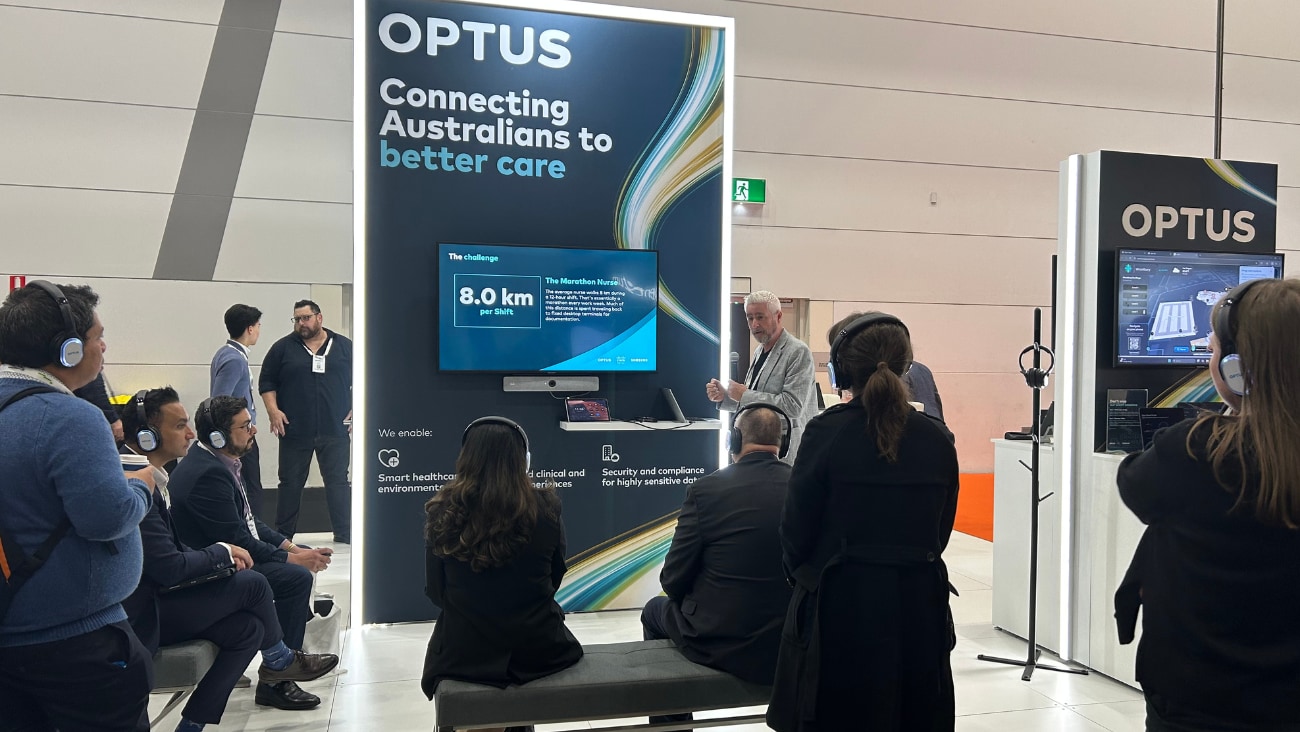
Walk through any hospital ward today and you're likely to see clinicians carrying a pager, a DECT handset, a shared tablet, and a separate barcode scanner. Sometimes all at once. It's exhausting, and it's inefficient. At the 2026 Digital Health Festival, Optus Enterprise Business Development Manager Martin Brown delivered a session exploring a smarter path forward.
The numbers tell a confronting story. The average nurse walks approximately 8 km per shift1. Much of that distance is spent travelling between patient bedsides and fixed desktop terminals just to enter clinical data. Physicians spend between 3.5 and 6 hours a day navigating electronic medical records (EMRs)2.
Every minute lost to slow systems and shared terminals is a minute taken from patient care. The technology meant to support clinicians has, in many cases, only added to the load.
Samsung Desktop Experience (DeX) changes the equation. Clinicians can move seamlessly from a mobile environment to a full desktop experience by simply docking their smartphone. DeX eliminates the multi-device juggle without sacrificing capability.
A single device can power three distinct modes of care:
- Mobile mode: Secure messaging, wristband scanning, and bedside documentation while on the move.
- DeX mode: Dock at a workstation to create a PC-like experience with intensive clinical charting and multi-window multitasking within the full EMR.
- Mirror mode: Cast lab results, imaging, and patient data directly to a room TV for shared education and consultations.
At the Digital Health Festival, Optus demonstrated DeX integrated with Epic, one of the world's leading EMR platforms. The showcase followed a full clinical journey. A clinician used their mobile device for rounding, switched to DeX mode for data-intensive documentation, then used screen mirroring for discharge patient education. One device. One shift.
Device convergence doesn't just make clinical workflows easier. It makes them safer and more cost-effective. Consider this: up to 20% of shared hospital tablets3 are lost or stolen each year. Legacy workstations on wheels bring their own challenges, from battery failures and infection control concerns to security vulnerabilities caused by shared logins.
Samsung's Knox suite addresses this directly. Knox Authentication Manager lets IT teams configure exactly what the DeX environment looks like for every user. Whether the device is shared or personal, access is seamless and secure. Biometric single sign-on and NFC tap-to-login can reduce login time by up to 60%4. Layered with Cisco Secure Access, the solution delivers defence-grade security across every point of care.
From a budget perspective, consolidating to a single managed device reduces hardware procurement costs. It simplifies fleet management and removes the ongoing expense of maintaining multiple device types, including the costly upkeep of workstation-on-wheels carts.
At its core, device convergence isn't a technology story. It's a patient care story. When clinicians spend less time navigating device sprawl, they can spend more time at the bedside.
Beyond the bedside, device convergence also transforms how teams communicate and extend care. By integrating Cisco's WebEx calling onto the same device, clinicians can replace legacy DECT handsets entirely, handling real-time messaging, VoIP calls, and secure clinical communications without switching between tools.
Telehealth is equally well served, when docked to a large monitor, the same device supports high-quality 4K video consultations and multi-party clinical collaboration. Because the platform is designed to evolve, organisations don't need to transform everything at once. It's possible to begin with the use case that addresses the biggest pain point and scale from there.
Optus Enterprise, in partnership with Samsung and Cisco, is helping Australian healthcare organisations take that next step. Whether you're reviewing your current device estate, wanting to bolster security, or ready to pilot a converged solution, our team is here to help. We'll work with you to build a smarter, more connected clinical environment.
Ready to explore device convergence for your healthcare organisation? Request a callback from our team today.

References
1Fijačko, N et al. ,2023, Nurses’ occupational physical activity and workload in a perioperative intensive care unit in Slovenia
2Finnegan, J, 2017, Primary care doctors spend more than 50% of workday on EHR tasks, American Medical Association study finds
3Imprivata, 2025, Shared mobile devices by the numbers: New healthcare industry research points the way toward greater ROI and streamlined clinical workflows
4Samsung Knox, 2023, Save time while sharing devices in the field: Meet Samsung’s new autofill app
To adapt to rapid change, you need more than technology
10 September 2026
Ask any enterprise leader about their five-year strategy and they’ll tell you the same thing: static roadmaps are dead.Boar...
Marist180 x Optus: The hidden cost of disconnection
9 September 2026
When Australians think about connectivity, they often think about convenience. Streaming a movie. Joining a Teams meeting. ...
Project Aurora: Smarter Satellite Servicing for a connected future
12 August 2026
For decades, the satellite industry followed a simple model: build a satellite, launch it into orbit and operate it until i...