Tony Baird’s comments at the Ballarat Bush Summit | Optus Leaders' Insights
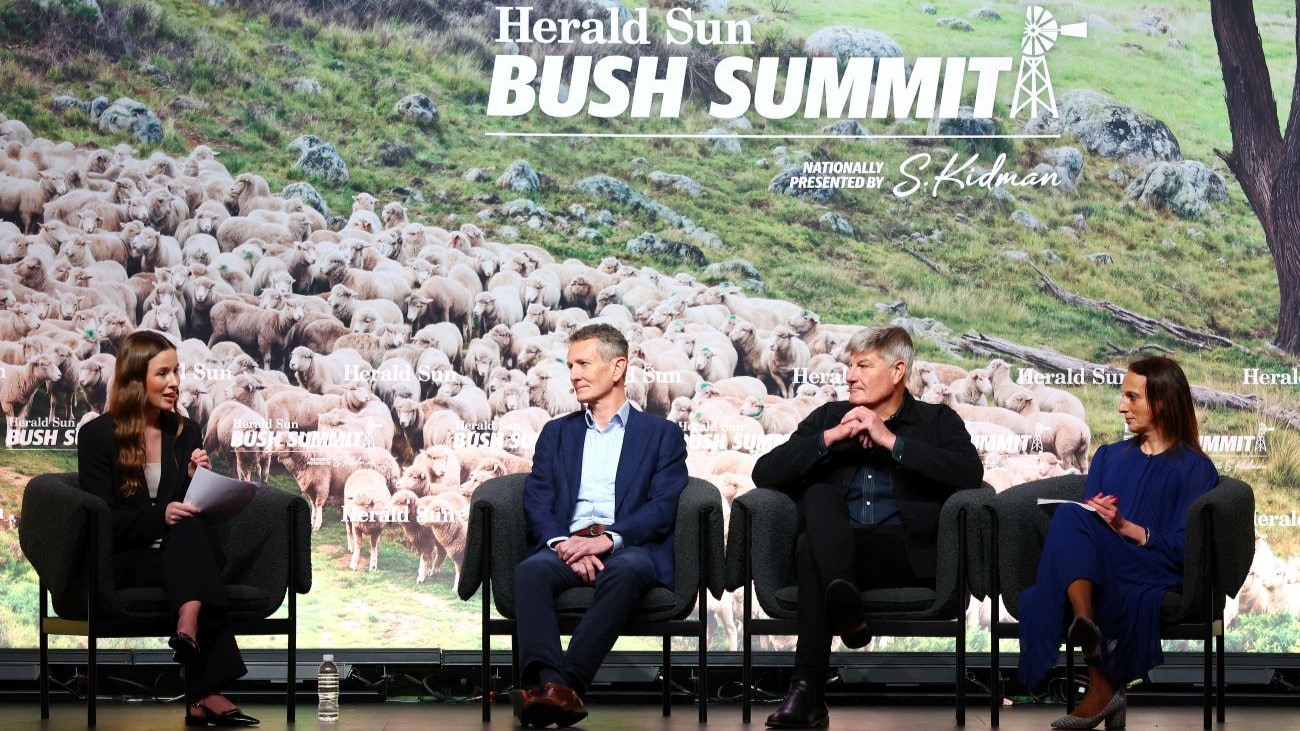
Image credit: Supplied
As part of Optus’ sponsorship of the News Corp Australia Bush Summit, Optus Chief Technology Officer, Networks Tony Baird joined a panel discussion with Victorian Chamber of Commerce and Industry Executive Director of Commercial Services Antoinette Truda, and, Federation University Vice-Chancellor Professor Duncan Bentley to discuss, ‘Infrastructure, productivity, skills and regions of the future’.
The Herald Sun’s State Politics Reporter Carly Douglas moderated the panel discussion.
These are some of Tony’s comments below:
I think the theme that we’ve heard in a number of areas today is around rural connectivity, it's around education, we've just heard it's around productivity, irrigation and other things - they all require communications.
Emergency services require communications, doctors, tele-medicine, they all require good communication services, and 5G, the G stands for generation, it's another generation of technology.
And why is it important? It's providing capacity for those types of services so that you can get online when you need it. You can do what you need remotely. But it's also around coverage. So as we're rolling out 5G, we're improving the coverage. We're prioritising rural 5G coverage with our build out.
There's about two and a half thousand cell sites in Victoria, for instance. We're about halfway through those upgrades.
In Ballarat has 32 cell sites, and 25 have been upgraded. With Ballarat's growth, ultimately we'll need to expand coverage. So definitely mobile technology is a critical infrastructure for all the reasons we've heard today, and we're pleased to be delivering it.”
“Firstly, you probably can tell from my accent that I come from a place with earthquakes and floods and now it's fires and floods.
And I know in all aspects, the emergency services do an amazing job, and we have to absolutely put our hands out to the emergency services in those times of stress.
But everybody in those times of stress is reliant on communications.
You see immediately on the network the spike of text in the immediate aftermath of an event. It's texting and it is phone calls, and then it's can I do transactions and my daily business? Can I actually make banking payments? Or whatever it might be.
So there's a definite dependency on telecommunications as a critical infrastructure. And my team and myself, we do our utmost to make sure that we maintain that.
Firstly, you've got to design it, right. Make sure that you have diversity of backbone and other infrastructure. Make sure that there's battery backup and generators.
Just as a point of reference, we have about nine and a half thousand cell sites across Australia, about two and a half thousand in Victoria, you cannot put a generator on every single cell site, that's just an impracticality call to be able to maintain the diesel and other things. So we need reliable electricity. We need batteries.
But when there are times of outage, we also need access to those sites so that we can deploy generators quickly and we can then refuel them. So site access is really important during these instances. Should the worst happen, deployables are really important, so we're investing in rapid deployables, things like you would have seen the drone that can basically be tethered. It goes up on a fibre optic cable with electricity, and will serve about three kilometres and can be deployed very, very quickly.
And then finally, it is low earth orbiting satellites, and there was talk earlier about some of the satellite technology coming through, and we see that as being also part of the kit bag for emergencies.
So, it's great people, it's designing for the future, and it's about having rapid deployables when we need and being able to get to the site when we need to get to it.”
“I think AI's going to be super important for all the conversations we've had today.
I mean, farm productivity is going to be linked to AI, I think, to make sure that the waters put in the right place at the right time, for the right crops. All those sorts of things require great communications. AI is actually only enabled because telecommunications exist. Especially in rural areas. So coverage is really important for that.
We use AI in the network as well, so, I'm using AI right now to control battery consumption. So if there's an emergency, we can actually look how heavily loaded the cell site is and turn the power up and down to make sure that we can conserve power for as long as possible. We are using AI to tune the radio frequency so that we get overlapping coverage if a cell site goes down.
So AI is super important to actually operating the network as well as the customers and people in the rural areas who are using the products that run over it.”
“For us, we were running our major data centres on generators for three to four days. So electricity reticulation is about 80% of our issue making sure we have electricity.
We deployed well over 150 generators across the area, both northern New South Wales and Queensland.
There's never enough generators, so we're actually in the process of getting more generators. Automation and dispatch is super important. You wouldn't believe it, but every eight hours to 24 hours, you need to go and refuel those generators.
So I think everybody can always do better. There's always learnings from these instances. But, it's so super critical to make sure we keep our services up.”

Tony Baird Managing Director, Networks
Tony Baird is Managing Director of Networks. He joined Optus in January 2025 and leads high-performing, diverse teams. Playing a pivotal role in shaping Optus’ long-term strategy, he is passionate about advancing technology and innovation within the telco industry.

Watch the Optus TV ad – There's always a way
31 August 2026
We’re debuting our new Optus ad – There's always a way. Watch it here.
Optus launches its FY26 sustainability report
15 July 2026
Optus has released its sustainability report for the 2026 financial year, detailing our commitment to sustainability , gove...
Strap in for another Supercars season with Optus
25 February 2026
If you’re a Supercars fan you’ve probably noticed the Optus logo speeding round the track in recent years as a proud suppor...