Why volunteering is both selfish and generous
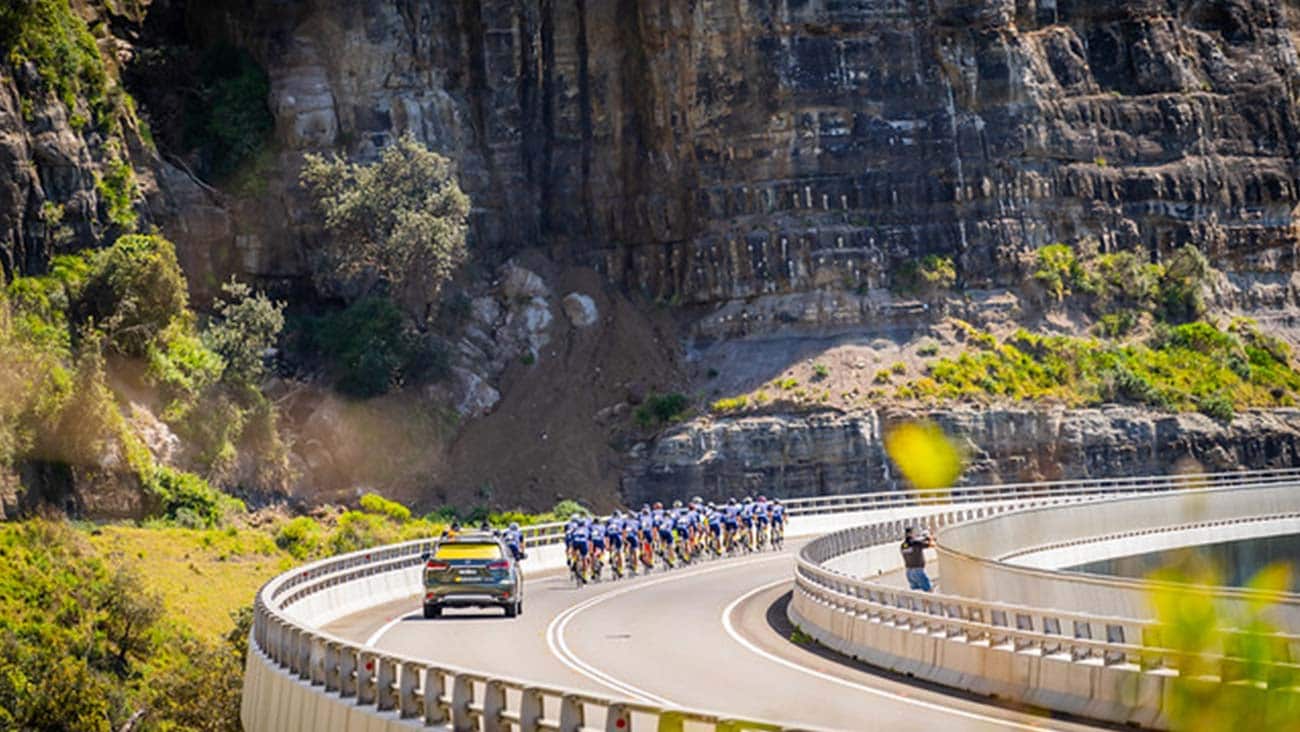
Volunteering can be a great way to connect with what matters. I recently participated in the Can4Cancer NSW ride to help raise money to beat cancer, experienced some of the beautiful South Coast and gained some feel-good karma.
‘Car back!’
‘Hole left!’
‘Clear 400!’
‘Holding 4!’
These calmly delivered, yet potentially life-saving radio calls echoed around my dreams after I collapsed in my motel bed after each day as a volunteer lead car driver. In fact, I still mutter these phrases when I’m on the road now, burnt-in mental sub-routines triggering a smile as I recall this life-changing experience and the amazing humans I met along the way.
But let me step back and explain why I’m sharing this story with you - let’s start at the beginning.
I’m more of a casual mountain biker than hardcore road rider, and like many, I’ve either been personally impacted by cancer or have had friends and family devastated by it. Even though my bike is better off road than on it, I still wanted to get involved with a cause that I’d heard about through word of mouth and on social media. So, I volunteered as a support crew member for Commonwealth Bank’s Can4Cancer NSW ride, expertly organised by Tour de Cure (TdC) and generously supported by corporate sponsors including Optus, Salesforce, Deloitte and Lexus. Optus kindly provides its people five days of paid volunteering leave which I gladly took advantage of.
Tour de Cure have raised almost $100m in their 15 years and have funded 80 breakthroughs by funding Australian cancer research. They’re a charity that truly makes a measurable difference, who also support local cancer support groups that they meet on their rides across the country, presenting them with cheques for $10,000 each day. They even visit primary schools along their route to deliver the message of ‘Be fit, be healthy, be happy’.
Having lost my father to a brain tumour, and with friends and family battling cancer, I wanted to help fund a cure so that I and my children might not have to face it in the future.
‘How would you feel about being lead car driver?’ I was asked. ‘That sounds ok’ I thought. I like driving and I’ll get to see some stunning parts of New South Wales. Can’t be too hard driving one of the generously donated Lexus cars around for three days, I even get my own navigator! I should think about what playlist I’ll listen to as I enjoy a leisurely cruise from Goulbourn via Huskisson and Kiama back to Sydney.
Apparently, I was now part of ‘the tour bubble’. At this point I wasn’t sure what that meant, but as the bubble slowly enveloped me, the riders and my fellow support crew, I began to understand. As all five pelotons totalling around 100 riders assembled in Goulburn on Saturday afternoon, you could feel the buzz starting to build. Anticipation. Uncertainty. Excitement.
I met my navigator, was given our car, my CB radio, my high-viz jacket and all the kit required to sustain the riders of peloton 4, two of the ‘challenge ride’ groups of cyclists who were experienced enough to tackle the longer stages. We had to ensure the water tank was filled, snacks were topped up, maps were loaded, the flashy light was on the roof, and that we had enough fuel. After the dinner briefing at a local hotel, we were instructed to get an early night. I set my alarm for 5:15am and dreamt of normal things.
Over years of tours, TdC has finessed the logistics of running such complex events. How they train, feed, transport and accommodate the riders requires a team of organised volunteers and passionate staff. Less visible are the mechanics, paramedics, videographers, drone operators and photographers who need directing too. Everyone knows what they must do, but everyone is there to help anyone else who needs it.
In my role, safety is paramount, with the front and rear cars responsible for protecting 25 squishy sponsored cyclists from other traffic and road hazards – and after the La Nina years, potholes were a particular danger. But I’d read the instructions. I’d memorised the radio calls. I was ready. Or so I thought.
Even before day one of the ride started, I realised my playlist wasn’t going to get heard. There’s no time to idly contemplate the existential value of curing cancer or enjoy the scenery - in fact barely time to find a toilet or grab a morning coffee. No distractions. No music. All focus.
My role was to drive 10 metres to 1 kilometre ahead of the peloton. In towns I needed to keep close to prevent cars pulling between my car and the riders, but not so close that they had to slow down. On the open road, cars would get held up behind the rear car who’d announce, ‘Holding three!’ on the radio - my trigger to zoom ahead and check for oncoming traffic so they could ‘Send send’ the cars safely around the peloton. However, if I went too far ahead, I’d lose contact with the four other radios, or cars could turn unseen behind me – potentially travelling head on towards the cars overtaking the riders.
I had to call out every pothole or road hazard, announce the next turns as advised by my dependable navigator and gee up the riders on steep climbs (‘4 kilometres to lunch guys!’, ‘You’ve got a nice long descent after this hill!’). From 6am to 3pm I was talking on the radio constantly – to the rear car, the three peloton managers on bikes, the media team, other pelotons and even on occasion to truckies on the road. By the second day I was losing my voice. Even my thumb was sore from hammering the ‘talk’ button on the radio. The cyclists were pushing their limits physically while my cognitive demands were maxing me out mentally.
So much for a leisurely drive in the country.
At times it was almost overwhelming, but calm and clear communication is vital, no matter how stressful the situation. It was a perfect example of teamwork, with everyone doing their job it became a beautiful orchestration of information flow. As hectic as it felt at times, the experience was joyful. Often a rider would put their hand on the back of another to help them get up a long climb. Darren Hicks, the Australian gold medal Paralympian, rode with us and inspired everyone with his stories of overcoming adversity. At rest stops, random people would thrust a $50 into your hand, sharing their stories of how cancer had impacted their lives. Car drivers would wave and toot their horn. I made many friends.
There was always much encouragement and recognition for everyone’s efforts – culminating in the arrival at Eveleigh in Sydney where colleagues, parents, friends and children cheered the triumphant riders home. Everyone had made it back safely, and at the time of writing, the bank and their fellow sponsors have now raised $2.6 million of their $3 million goal.
Many people I speak to mean to get around to volunteering, but somehow it never gets to the top of their priority list. I felt the same too. One day I’d find a cause that would motivate me enough to have a go, or a colleague would pester me enough that I’d reluctantly agree to join in with them. To be honest with myself, it felt like a chore, a mild obligation, perhaps a thing that could be perpetually procrastinated into the future. At least I meant well, right?
But here’s the thing.
This is what I found most surprising: it was an incredible experience JUST FOR ME. Sure, I helped others raise a staggering amount of life-changing funds, but even stripping away the altruistic upside, for a few days I was a member of a travelling circus of positivity. Each person I interacted with shared a purpose. Colleagues and strangers alike were supporting each other, sharing stories, expressing emotions, being in the moment together. It was magical.
So next time you’re idly wondering about investing your time for a good cause, don’t push it down your list like you usually do. Do it for yourself.
The future you will thank you for it.
Not everyone can jump on a bike and join the next Tour, luckily there are other ways you can pay it forward and help other families in need.
Donate your data
Many Australians are disadvantaged without regular access to the internet. With our partners, The Smith Family, we’re working to change this. And you can help.
With an eligible Optus mobile plan, you can donate some of your data each month if you like. This gives much needed internet access to young people, their families and other Aussies who might be doing it tough so they can learn, look for a job and connect to vital services.
We regularly have data left over in our plans’ monthly allowance, so I set a monthly calendar reminder to donate the data we won’t use, to people who need it.
Aidan Beanland works at Optus when he’s not collecting extreme sports injuries, Aidan helps people find things on the internet.
EOFY scams: how to stay safe
7 October 2026
Stay safe this EOFY season – protect yourself from EOFY scams and read up on the tactics of scammers.
Optus Digital Thumbprint teams up with Hoops 4 Health to keep young people safe online
2 July 2026
Optus Digital Thumbprint and Supercars star Chaz Mostert helped deliver a Hoops 4 Health session in the Top End, empowering...
Donate Your Data. Help Change Lives.
23 February 2026
When people think of hardship, they don’t always picture Australia’s Northern Beaches. But behind the coastal postcard lies...