Businesses we love: Chris Boyle builds human connection through tech
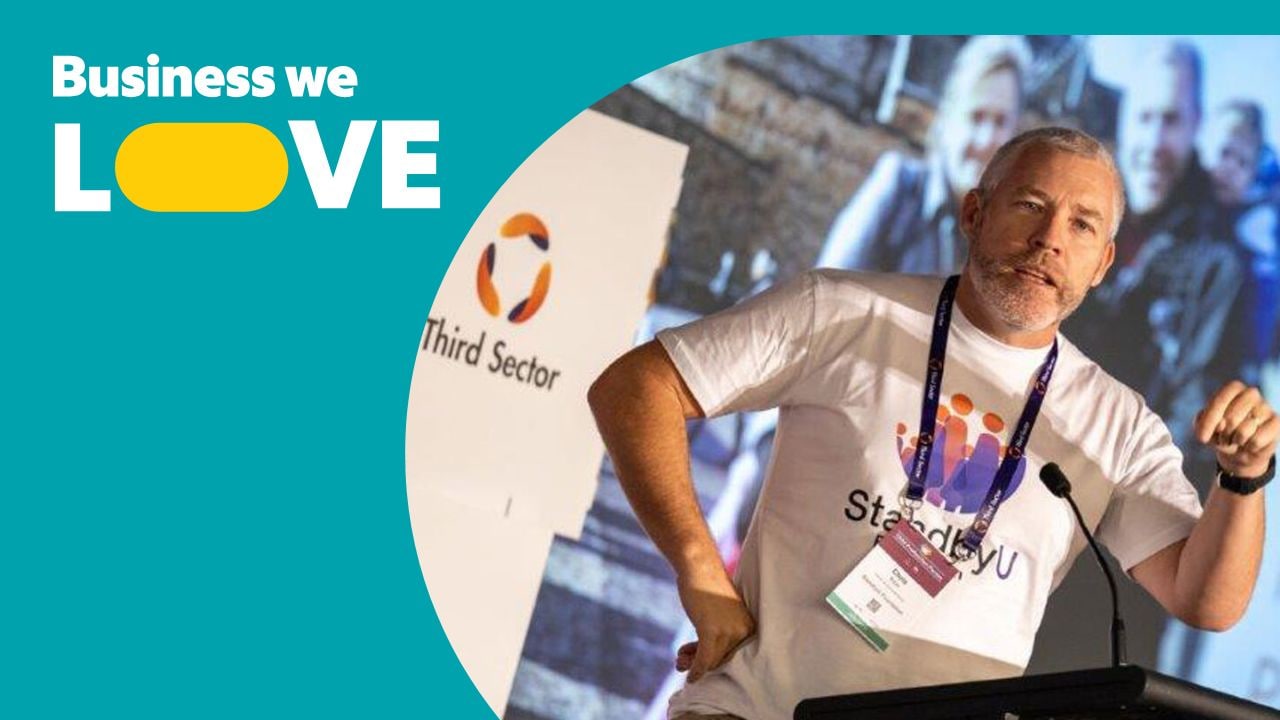
Chris Boyle founded StandbyU Foundation to help vulnerable Australians stay connected to the people who care most. Here, he shares the inspiration behind the organisation, the role technology plays in human safety and why connection should always come first.
Optus is proud to introduce 'Businesses We Love'. In each edition, we chat with Australian founders and business leaders about productivity, connectivity, technology and the realities of running a modern business.
For Chris Boyle, founder of StandbyU Foundation, technology has never been about replacing people. It’s about helping them stay connected.
The social worker-turned-founder has spent decades working in child protection, family support and domestic violence systems before launching StandbyU, a tech-for-good organisation focused on mobilising family and friends as first responders for vulnerable people.
Eight years on, StandbyU now operates nationally, combining human-centred support frameworks with connected technology solutions designed to help people feel safer, supported and less isolated.
Let’s hear from Chris.
For people who haven’t come across StandbyU before, can you tell me a little bit about what the organisation does and the problem you’re trying to solve?
“StandbyU is focused on human connection. We believe nobody should face challenges alone, and that many people experiencing vulnerability are often isolated. We believe safety starts with human connection, not sirens.
“Our work is about mobilising family and friends as first responders to issues before incidents occur. Whether someone is vulnerable due to mental health challenges, domestic and family violence, or abuse, we want to connect people who are vulnerable with people who care.
We’ve developed technology solutions based around a social work framework that asks: how do we come together in times of need?”
What inspired you to start StandbyU? Was there a particular moment or experience that sparked the idea?
“I’m a social worker and have worked in systems around child protection, family support and domestic violence for about 30 years. I have visited a lot of incredible services doing important work, but one thing really stood out to me. Services are always finite. There’s eligibility criteria, waiting lists, case closures and funding limits.
“My reflection was this: the system that keeps children safe and families supported is families and friends themselves. Unlike services, there’s no intake, no case closure and no invoice to the taxpayer. Families aren’t passive. People want to help.
hey just need the knowledge and tools to know how to do that safely and effectively. That became the genesis of StandbyU Foundation.”
Where is the organisation based and why is that the right fit for you and the team?
“We’re based in Brisbane and also have a storefront on the Gold Coast, but we operate nationally.
“The same challenges we’re addressing in our local community are happening right across Australia, so our model is designed to have a small footprint while partnering with existing services and community organisations.
“Strategically, we don’t just want to exist in reactive spaces like hospitals, courts or police stations. We want to be in telcos, banks, workplaces and community clubs because those are the places people already are before a crisis escalates.”
How big is the team these days and how do you all stay connected day to day?
“We’re a team of nine spread across the eastern seaboard. We rely heavily on connectivity and technology to keep everyone working seamlessly together, whether they’re working remotely, in our storefront or interstate. We use shared communication platforms constantly to stay updated on challenges, wins and the work happening across the organisation.
“Even though we’re geographically spread out, it’s really important that everyone still feels connected to the bigger purpose behind what we do.”
Is there a piece of tech or a business tool you genuinely couldn’t imagine running the organisation without?
“Absolutely. Because we’re cloud based, so much of our work relies on strong infrastructure and connectivity.
“Our StandbyU Shield solution relies on telco infrastructure, SIM technology, data networks and communication systems operating reliably at all times. From a team perspective, our shared communication tools, CRM systems and live case management platforms are essential to how we work collaboratively across locations.
“Optus has been a huge part of that journey for us. We first connected through the Optus Future Makers program back in 2018, and the things we learned through that experience still resonate throughout the organisation today. They’ve been with us every step along the way as we’ve grown and scaled, and it’s been wonderful to continue building that partnership over many years.”
Can you explain how the StandbyU Shield works?
“The Shield combines both technology and a human-centred support framework. The physical device itself is simple. It can be worn as a watch or pendant and contains a SIM card, antenna and battery. But the real power sits in the network around it.
“When someone comes to us, we ask them who already knows about the things keeping them awake at night and who would drop everything to help if they knew they were unsafe.
“Those trusted people become part of the response network. If the user presses the Shield, it silently creates a conference call between the device and that chosen group of responders. The device itself stays muted, so nobody around the person knows it’s been activated.
“The responders can hear what’s happening, communicate with each other and, if necessary, connect emergency services directly into the call. It means people never have to face danger alone or struggle to explain what’s happening in a crisis.”
How are you using AI at the moment? Is there a task you find it especially useful for?
“We’re starting to explore AI and automation, particularly around scaling parts of the organisation and streamlining administrative processes. But we’re very careful about how we approach it because we never want AI to replace relationships. Human connection is central to everything we do.
“At the moment, we’re using AI cautiously for things like correspondence and applications, but not as an interface for end users. Relationships and trust are critical in our work, so any future use of AI will always be guided by that principle.”
Looking back, what’s been the most meaningful phone call or message you’ve received about the impact StandbyU has had?
“One story that has stayed with me involved a young mother experiencing domestic violence who came to us after being told by traditional services that the only refuge available was 500 kilometres away from her community.
“She had work, childcare, family and faith connections locally, so leaving simply wasn’t realistic. At one point, she and her daughter were sleeping in her car, parking the damaged side against a wall to stay safe, because her former partner had smashed it in.
“Through our StandbyU Shield framework, we connected her back to family members she’d become isolated from and created a support network around her.
“She later told us that before receiving the Shield, her seven-year-old daughter would ask to go to the park and she would have to say no because she was too scared to leave the house. Afterwards, she said she could finally say yes because she felt connected, visible and supported. She knew she didn’t have to face fear alone anymore. That’s the real power of what we’re trying to create.”
Running a purpose-driven organisation can be emotionally heavy. What do you do outside of work to recharge?
“That’s definitely been a challenge because this kind of work is more of a vocation than a job.
“Over the years I’ve learned how important it is to intentionally make time for family. Last year we took our first holiday in seven years, which was a really important reminder that families come along on this journey too.
“I love spending time fishing with my son, going to dinner with my daughters and recently getting into golf with my son as well, even though I’m not very good at it.
“Balance has always been difficult, but we’ve become much more intentional about protecting that space and making sure we don’t overextend emotionally.”
You work at the intersection of technology and human safety. What’s the most meaningful use of technology you’ve seen lately?
“For me, the best technology is technology that helps people do what they already do, but better, while creating more space for meaningful human connection.”
“Like any innovation, though, it comes down to intent. We need good people guiding these technologies for the right reasons and ensuring safety stays at the centre of how they’re used.”
Disclaimer: This article does not constitute advice and is shared for information purposes only – every business is unique, we suggest seeking independent advice to suit your own needs. This content was produced by SmartCompany, in partnership with Optus Business.
To learn more about how connectivity and technology solutions are helping Australian businesses grow and stay connected, visit Optus Business.
Mark Bouris: How to Grow a Business the Right Way
24 August 2026
Every business wants to grow, but not everyone does it well.
Mark Bouris: How to get your first customer
17 August 2026
If you want your first customer, the first thing you need to understand is that waiting around has never worked for anyone.
Businesses We Love: Madebox founder Samantha Finnegan on the role gifting can play in building a brand
17 August 2026
For Samantha Finnegan, corporate gifting has never really been about what's inside the box.